Hot Rods and Cold Shoulders
Why the F1 Paddock Hates Mercedes Again

Being a Mercedes fan the past few years has felt less like watching a premium racing team and more like watching a very expensive, silver-plated tractor struggle through a muddy field. It has been a test of patience. Between the ground-effects misery and Lewis Hamilton packing his bags for Maranello, it was a dark pit of despair. I even briefly considered wearing red and joining the Tifosi just to keep my partner, Carly, company.
Thankfully, I regained my senses. Mercedes has arrived in 2026 with a car, the W17, that actually behaves itself, though it seems the rest of the paddock is not exactly throwing us a “welcome back” party. In fact, they are quite annoyed. It turns out that our extremely talented Mercedes engineers have been doing some very clever things with a bit of heat and some metal, leading to a row that has the FIA reaching for their thermometers. Here is why everyone is so bothered by the Silver Arrows again.
The 2026 engine rule change
The Formula 1 paddock is currently alight with talk about a clever bit of engineering from the Mercedes team that has left their rivals scrambling. To understand the drama, we first need to look at the new engine regulations introduced for this 2026 season. Along with a raft of other changes, the governing body, the FIA, decided to lower the maximum compression ratio of the engines from 18:1 down to 16:1. This was intended to make the power units simpler to build for new manufacturers and more compatible with the new sustainable fuels being used.
Spotting the loophole
The controversy centres on how this rule is actually checked. In the technical regulations, it was stated that the compression ratio would be measured at ambient temperature. This means that when the engine is cold and sitting in the garage, it must meet that 16:1 limit. It is speculated that Mercedes has recognised a massive opportunity here. By allegedly using specific materials for components, they may have designed an engine that passes the cold test perfectly but changes its geometry as it gets hot.
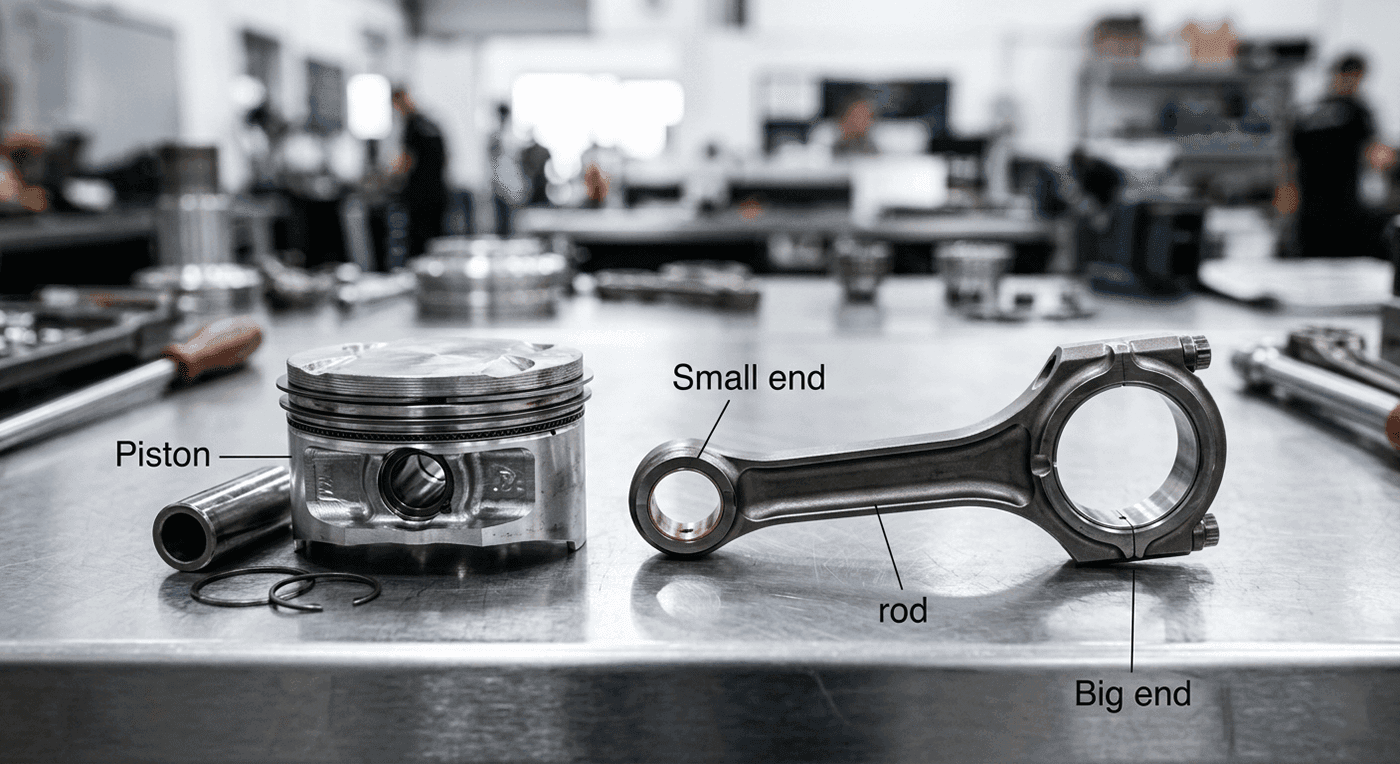
How the hot compression boost works
There is talk of “specific materials” for “engine components” but if I had to guess I would suspect the core of any potential clever engineering lies specifically in the material science of the connecting rod, which is the metal arm that links the piston to the crankshaft. In a standard racing engine, engineers typically select materials that are incredibly stable to ensure the dimensions of the engine remain constant regardless of the heat. Mercedes, however, might have opted for a specialised metal alloy for these rods that has a higher rate of thermal expansion than what is usually found in a high performance unit.
When a Formula 1 engine is running at full tilt, it reaches incredible temperatures. As the engine reaches its operating temperature of over one hundred degrees Celsius, these connecting rods could actually grow in length by more than a quarter of a millimetre. While this might seem like a negligible change, it has a profound impact on the geometry of the combustion chamber. Because the rod is longer, it pushes the piston further up toward the cylinder head when it reaches the top of its stroke. This point is known as top dead centre, and by reaching slightly higher, the piston leaves less room for the air and fuel mixture to be squeezed. This effectively shrinks the space and this reduction in volume at the peak of the stroke is what rises the compression ratio back up toward the old 18:1 limit during the race.
By squeezing the mixture into a smaller space before ignition, the engine generates a much more violent and efficient explosion when the spark plug fires. This increased pressure translates directly into more torque and horsepower being sent to the wheels. The cleverness of this alleged design is that the engine remains perfectly legal when it is cold because the connecting rods shrink back to their original size, ensuring the compression ratio falls back to the mandatory limit whenever the car is not racing.
Risks, rewards, and paddock politics
If a power unit was designed like this, engineers would have to account for the increased stress this growth puts on the engine. If the piston travels too far, it risks hitting the valves at the top of the cylinder, which would cause a catastrophic failure. The expansion would have to be calculated with extreme precision, ensuring the engine would only reach its maximum power potential once the oil and water temperatures were fully optimised. It would be a high risk strategy because if the engine runs slightly hotter than planned, the expansion could exceed the safety limits and destroy the power unit.
A power unit engineered in this manner would provide a significant boost in performance, with some estimates suggesting a gain of around 15 to 40 horsepower. In a sport where every tenth of a second is vital, that is a massive advantage. A three tenths of a second per lap benefit have been mentioned. Naturally, rival manufacturers like Ferrari, Honda, and Audi were less than impressed when they realised what might be happening. They argued that while the engine might be legal during a static cold test, it violates the spirit of the limit when it actually matters on the circuit. It is the kind of loophole hunting that makes Formula 1 both brilliant and infuriating, depending on whether you are the one winning or losing.
This is exactly why Formula 1 remains so captivating. It exists at the absolute cutting edge of racing technology, a world where the best of the best are guided by stellar leadership towards one singular objective: winning. While there are always those who might lean into slightly underhanded tactics to find an edge (Red who?), the true heart of the sport is found in these engineering marvels. Discovering a loophole in the rulebook and turning it into a mechanical masterstroke is peak Formula 1. It is a place where genius and craft collide in the pursuit of the chequered flag.
The FIA’s clampdown
The FIA has now stepped in to address the situation following heated debate between the manufacturers. A new rule was recently approved that changes the way these measurements are taken. Starting from June 2026, the engines will be measured at both ambient temperature and at a representative operating temperature of 130°C. This essentially forces all constructors to ensure their engines stay within the limit regardless of how hot it gets. However, if Mercedes does have a “hot rod” power unit, they will have the advantage for the beginning of the season, which has left many in the pit lane feeling frustrated.
So, while the FIA prepares their thermometers for the June deadline, Mercedes might benefit from a few months of thermal stretching. It is a classic F1 move worthy of Christian Horner: find a loophole, drive through it at 200mph, and act deeply offended when everyone else starts crying foul. For now, I can stop looking at Ferrari brochures and enjoy the sight of a silver car leading the pack again.

Of course, the Tifosi are looking great for 2026 as well. Between their miniature, high performing turbo, their radical rotating rear wing and that cheeky exhaust deflector, they will likely be trading paint with Mercedes for podiums at every grand prix. It is the ultimate durability test: will sixteen years of domestic bliss survive the great Silver Arrows versus Scuderia battle of 2026? If the first half of the season plays out like how I think it might, I suspect the atmosphere at home might become more heated than a Mercedes connecting rod at full throttle.
← Writing